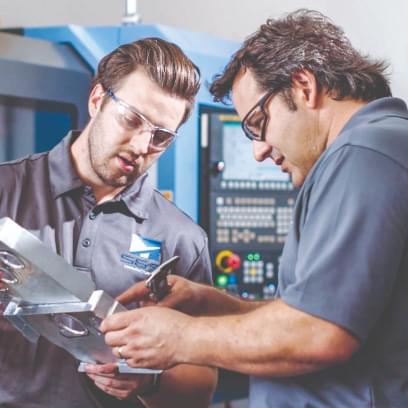
The CNC control system is often described as the “brain” of a machine tool, orchestrating every movement, calculation, and machining instruction. While spindle power and mechanical rigidity are critical, the control platform ultimately determines how efficiently a machine performs, how easily it integrates into digital workflows, and how well it adapts to future manufacturing demands. For decision-makers, selecting the right CNC control is a strategic investment that influences productivity, operator performance, and long-term operational flexibility.
One of the primary considerations is usability. An intuitive interface reduces the learning curve for operators and programmers, enabling faster adoption and fewer input errors. Modern control systems feature graphical displays, conversational programming capabilities, and simulation tools that allow users to verify machining processes before execution. These features not only improve confidence on the shop floor but also help prevent costly mistakes.
Processing power is equally important. Advanced controls can interpret complex tool paths with high precision, supporting high-speed machining and multi-axis interpolation without sacrificing surface quality. This capability is particularly valuable in industries such as aerospace, medical, and automotive manufacturing, where intricate geometries and tight tolerances are standard requirements.
Connectivity has become a defining characteristic of next-generation CNC controls. Systems that support industrial communication protocols can seamlessly connect with Manufacturing Execution Systems (MES), Enterprise Resource Planning (ERP) platforms, and factory analytics tools. This integration enables real-time monitoring, better production planning, and more informed decision-making across the organization.
Another strategic factor is scalability. Manufacturers should consider whether the control system can accommodate future needs such as automation, AI-driven analytics, or additional machine capabilities. A flexible control architecture helps protect the investment by ensuring that the machine remains compatible with evolving technologies and production strategies.
Reliability and support should not be overlooked. Established control providers offer global service networks, regular software updates, and strong cybersecurity measures. These elements contribute to operational continuity and reduce the risks associated with unexpected downtime or system vulnerabilities.
Machine tool manufacturers such as DN Solutions and HELLER partner with leading control providers to deliver platforms that combine mechanical excellence with advanced digital capabilities. By aligning machine design with proven control technologies, they help manufacturers achieve consistent performance while maintaining the adaptability required in a rapidly changing industrial landscape.
Ultimately, choosing the right CNC control system is about more than technical specifications—it is about enabling smarter manufacturing. A well-selected control platform empowers operators, enhances process reliability, and creates the digital foundation necessary for continuous improvement. For organizations focused on competitiveness and resilience, this decision plays a pivotal role in shaping the future of their production environment.