
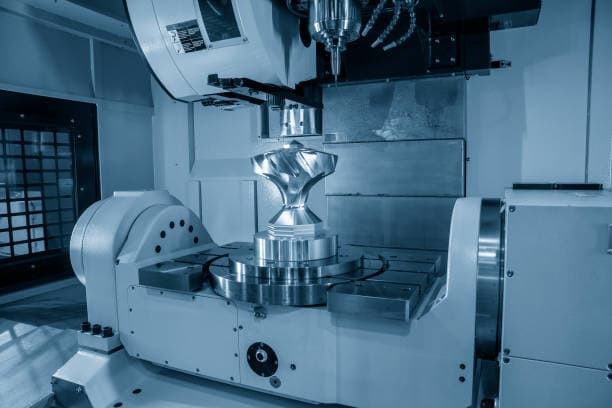
In modern manufacturing, reducing cycle time is one of the most effective ways to increase productivity and improve profitability. However, accelerating production must never come at the expense of part quality or process stability. The challenge for manufacturers is to identify strategies that shorten machining time while maintaining the precision and surface finish required by today’s demanding industries.
A key starting point is process optimization. Advanced CAM software enables engineers to generate highly efficient tool paths that minimize air cutting, reduce unnecessary tool movements, and maintain consistent chip load. Strategies such as high-efficiency milling and dynamic tool paths allow for higher material removal rates while controlling heat generation and tool stress. The result is faster machining without introducing geometric inaccuracies or premature tool wear.
Tooling selection also plays a critical role. High-performance cutting tools designed for specific materials can operate at higher speeds and feeds while preserving surface integrity. Equally important is the use of balanced tool holders and rigid clamping systems, which reduce vibration and prevent chatter—two major contributors to quality issues when attempting to machine at higher speeds.
Machine capability is another decisive factor. CNC machines with high structural rigidity, thermal stability, and responsive servo systems can sustain aggressive cutting parameters without sacrificing accuracy. Faster spindle acceleration, optimized axis dynamics, and reduced non-cutting movements collectively contribute to shorter cycle times while ensuring repeatable results across production runs.
Automation further enhances efficiency by eliminating secondary delays. Automatic tool changers, pallet systems, and intelligent workholding solutions reduce setup times and keep spindles cutting for a greater percentage of the production cycle. When combined with real-time monitoring, manufacturers gain the visibility needed to detect deviations early and maintain consistent quality standards.
Equally important is a data-driven approach to continuous improvement. By analyzing cycle data, tool life metrics, and machine performance, manufacturers can identify hidden inefficiencies and refine their processes over time. Even incremental reductions in cycle time can generate significant capacity gains when scaled across hundreds or thousands of parts.
Machine tool builders such as DN Solutions and HELLER design their platforms to support high-productivity machining without compromising precision. Through robust mechanical construction, advanced control technologies, and integration-ready architectures, these machines provide the foundation required for faster yet reliable production.
Ultimately, reducing cycle time is not about pushing machines to their limits—it is about building a balanced machining strategy where tooling, machine capability, and process intelligence work together. Manufacturers that master this balance achieve higher throughput, improved cost efficiency, and the consistent quality needed to remain competitive in an increasingly demanding market.